Category: News

  • De La Hoya Warns Ortiz Jr. Dispute Echoes Mikey Garcia, Andre Ward

    De La Hoya Warns Ortiz Jr. Dispute Echoes Mikey Garcia, Andre Ward

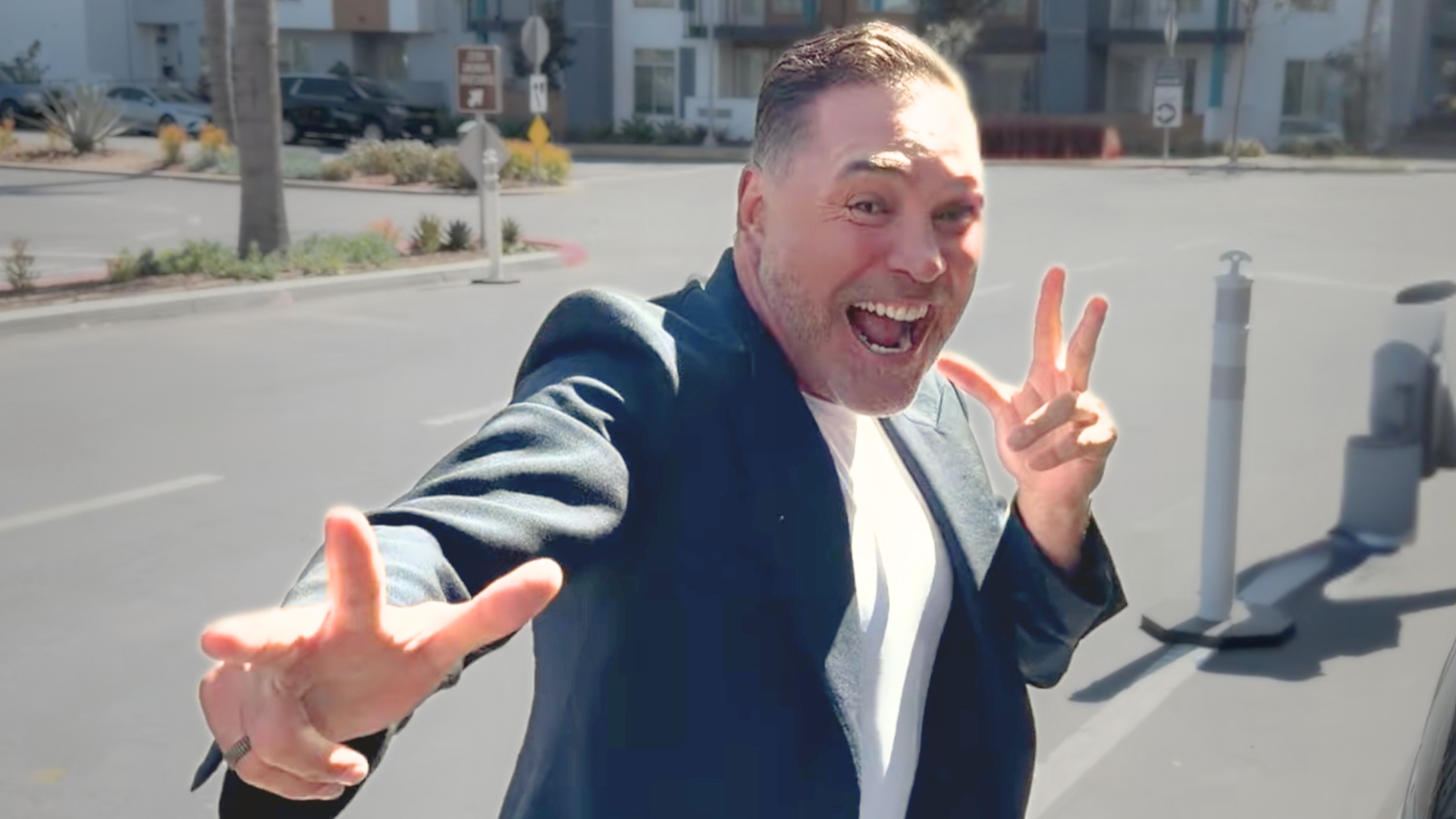
    Oscar De La Hoya is defending his contractual rights against Vergil Ortiz Jr. — and he’s placing the blame for the standoff squarely on Ortiz’s management team.

    De La Hoya, speaking on FightHype on March 12, 2026 — the same day he celebrated a legal victory in a separate case — said Ortiz has the talent and the time to rebuild his career under Golden Boy Promotions, but that bad advice is keeping him out of the ring.

    “Virgil Ortiz is 29, 30 years old. He has his own voice. He can choose whatever he wants to choose. So he doesn’t have to listen to his manager who’s giving him the wrong advice and his lawyer who’s just keeping him away from boxing. It’s crazy.”

    De La Hoya Standing Firm on His Contract

    With a judge already ruling in his favor on the contract’s validity, De La Hoya said he has no intention of walking away from his legal position — and framed it as a matter of principle, not just business.

    “I’m going to defend my rights because I have a contract that’s in place that the judge ruled on. Those are my rights as a fighter. You know what you’re signing.”

    He pushed back on any suggestion that Golden Boy’s terms are being forced on Ortiz, insisting his approach with fighters has always been one of full transparency.

    “Me as a fighter, I explain to the fighters everything that’s on the table. There’s nothing to hide.”

    ‘Are We Seeing Another Mikey Garcia Situation?’

    De La Hoya drew a historical parallel to fighters who stepped away from the sport in their prime due to promotional disputes, suggesting Ortiz is at risk of making the same mistake.

    “Are we seeing another Mikey Garcia situation? It’s pretty sad. Andre Ward, too.”

    Both Garcia and Ward were elite-level talents whose careers were complicated — and in Ward’s case effectively ended — by contractual and promotional disagreements.

    De La Hoya said Ortiz’s management appears to be steering him in a similar direction, keeping a prime fighter on the sidelines while the clock runs on his best years.

    “The fact that there’s a manager and a lawyer who’s giving you the wrong advice — maybe the fighter should stand up and say, ‘Oscar’s right. Let me continue my career and let me fight and let me continue making a lot of money.’”

    The Bigger Picture

    De La Hoya’s comments came as part of a broader conversation about fighter compensation and promoter-athlete dynamics across combat sports.

    He has positioned Golden Boy as a fighter-first operation, one that gives athletes a larger share of revenue compared to what he describes as an inverted financial structure in organizations like the UFC.

    Whether Ortiz ultimately returns to Golden Boy or the dispute escalates further remains to be seen, but De La Hoya made clear he isn’t blinking — and that the door remains open if Ortiz’s camp changes course.
  • Oscar De La Hoya: UFC Suppresses Fighters to Protect Its Brand

    Oscar De La Hoya: UFC Suppresses Fighters to Protect Its Brand

    Oscar De La Hoya says the UFC’s business model is built on keeping fighters small — and that Jon Jones requesting his release is proof the cracks are finally showing.

    Speaking on FightHype on March 12, 2026, De La Hoya weighed in on Jones seeking his UFC release after being lowballed for the White House card, offering a blunt take on the organization’s philosophy toward its own athletes.

    “Every fighter in the UFC is finally starting to realize,” De La Hoya said. “I’m glad he’s speaking up. I’m glad he’s in the right. Wish him all the best — he’s a great fighter. He’s their greatest fighter.”

    UFC Doesn’t Want Any Fighter Bigger Than the Brand

    De La Hoya argued the suppression isn’t accidental — it’s structural. The UFC, he said, has always prioritized the organization’s identity over any individual star, and that strategy is now backfiring.

    “They want to suppress other fighters. They don’t want any fighter to be bigger than the UFC. And that’s why the UFC is going tanking down.”

    He tied the UFC’s recent push into boxing directly to that instability, framing it as a financial lifeline rather than a strategic expansion.

    “That’s why they’re involved in boxing now — because they want to start a new entity to help their bottom line. That’s it.”

    Boxing Pays Fighters. The UFC Pays Executives.

    De La Hoya drew a sharp contrast between how the two sports distribute revenue. In boxing, he said, fighters capture the largest share of earnings. In the UFC, the pyramid is flipped.

    “Fighters are starting to understand that when you have such a global company and presence making tons and tons of money — not for the fighters, but for the bottom line and for the executives — there’s something wrong there,” he said.

    “In boxing, it’s structured the other way around. The fighters make all the money. In the UFC, it’s the other way around. And that’s wrong.”

    He pointed to the ongoing uproar over UFC fighter pay as evidence of a systemic failure. When Conor Benn’s reported $15 million payday became a flashpoint across the roster, De La Hoya saw it as revealing — not about McGregor, but about everyone else.

    “Good for him, he’s getting his paycheck. It’s a one-off. But what about the UFC fighters who’ve been fighting all their lives, putting their lives on the line and getting a fraction of what the event totals for the night? It’s just not fair.

    The fact that every single UFC fighter is complaining about $15 million goes to show you that no UFC fighter has made $15 million — and they deserve way much more than what the UFC overall is taking in.”

    Ronda Rousey, the Antitrust Suit, and the Legal Tide Turning

    De La Hoya also validated Ronda Rousey’s recent comments framing Dana White as merely an “employee” with limited structural power. “She’s totally right,” he said. “She made the clap back in a positive way.”

    On the ongoing antitrust lawsuit brought by UFC fighters, De La Hoya expressed confidence that the legal momentum is on the athletes’ side. “It’s a great thing for the fighters’ league that is suing the UFC. They won one time, they’re probably going to win again.”

    For De La Hoya, the broader point is that the reckoning has been a long time coming — and the UFC’s expansion into boxing is a sign of an organization scrambling, not thriving.

  • Deontay Wilder Taunts Derek Chisora: ‘Try to Kill Me’

    Deontay Wilder Taunts Derek Chisora: ‘Try to Kill Me’

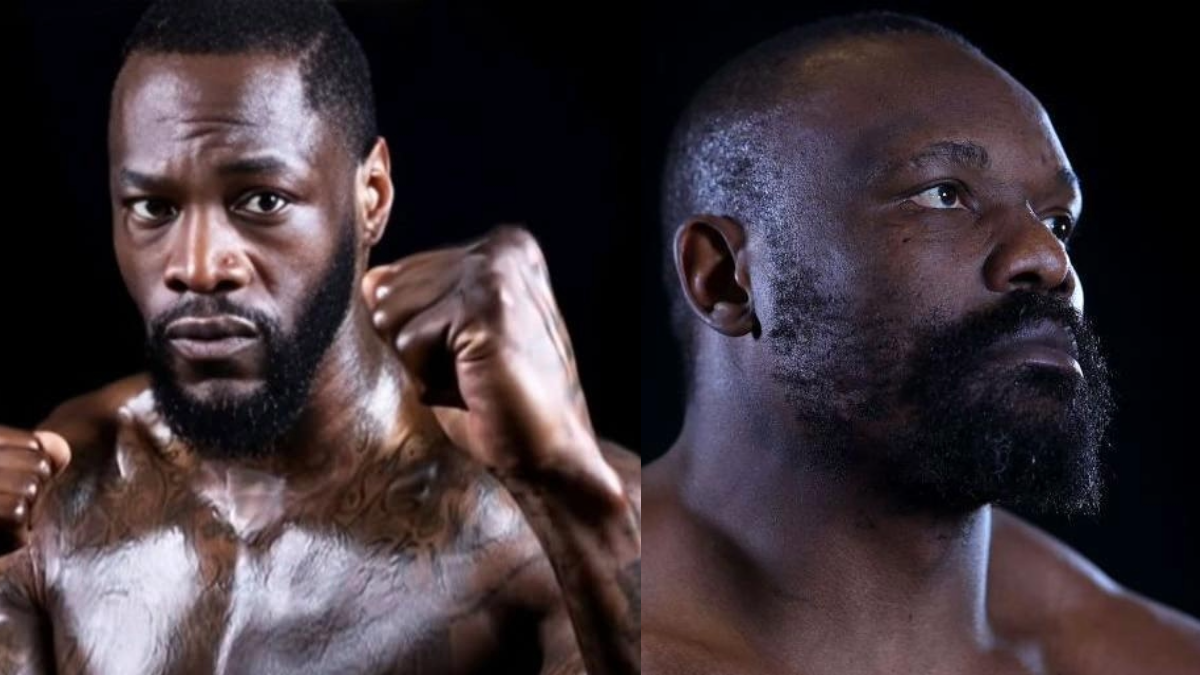
    Deontay Wilder recently sent out a message tp Derek Chisora ahead of their April 4th clash at the O2 Arena in London — and it isn’t exactly what you’d expect from a man who calls his opponent a friend.

    Speaking with Louis Hart of Ring Magazine during fight week in London, Wilder revealed exactly what he told Chisora when the two had their last real conversation before the fight.

    “When I say that we can be friends on the outside, but when that fight comes, we going to turn that off. I’ve already told him — I want you to try to kill me. You understand me? And he looked at me kind of weird… like, that’s what I need.”

    The Last Conversation

    Wilder described a deliberate pre-fight ritual of cutting off communication entirely — something he’s done before, even with people close to him personally.

    “I also had a brother that I fought and I told him the same thing. This is going to be the last time we talk. The next time we see each other, we going to be in each other’s face. We going to be at war — because I need that point of time to turn it off.”

    The contrast between genuine friendship and fight-night ferocity is something Wilder says he’s made peace with. He’s cordial, even warm, with Chisora outside the ropes — but none of that carries into the ring.

    “I can be cordial, I can be friendly with anyone — but that don’t mean that I can’t switch to want to whoop your ass. That’s just what it is. We’re fighters. I’m a fighter. And I’m proven to be that way. This is not just talk.”

    Fight 50 at the O2

    The April 4 bout marks Wilder’s 50th professional fight — a milestone the former WBC heavyweight champion is approaching with a full head of competitive steam. Wilder says the setting only adds to the sense of occasion.

    “April the 4th at the O2 Arena — it’s going to be electrifying, it’s going to be crazy. It feels like my debut all over again. And I can’t wait.”

    Wilder has been away from the UK since his Sheffield debut years ago, and the return carries emotional weight. But make no mistake — whatever warmth he has for the country, and whatever friendship exists between him and Chisora, will be switched off long before the opening bell.

  • Usyk Excludes Deontay Wilder From Retirement Plan, Eyes Rico Verhoeven

    Usyk Excludes Deontay Wilder From Retirement Plan, Eyes Rico Verhoeven

    Oleksandr Usyk, the unified heavyweight champion with a record of 24-0 (15 KOs), recently revealed his plans for retirement, notably excluding a potential fight with Deontay Wilder.

    Usyk’s plan outlines three fights before he hangs up the gloves. He is scheduled to defend his WBC heavyweight title against Rico Verhoeven on May 23rd.

    The 39-year-old, who previously vacated the IBF heavyweight title in June last year, indicated who he wants to face in his farewell fight. It would be the 27th outing of his incredible career.

    Usyk’s Retirement Plan

    Speaking with The Ring, he said:

    “I will have three more fights. Listen, Rico is first, second it’s who wins between Wardley or Dubois and then my third fight is my friend Greedy Belly, Tyson Fury.”

    While Usyk does expect to face Fury, he does not think he will cross paths with Moses Itauma, the rising star of the heavyweight division.

    “No, I’m not going to fight with Itauma because he’s a young guy,” he said. “I don’t want to break this guy.”

    Usyk has already defeated Fury twice after his back-to-back victories at Riyadh’s Kingdom Arena in 2024, which sent the Brit into a short retirement.

  • Deontay Wilder: “We Risk Our Lives for Others’ Entertainment, We’re the 1%”

    Deontay Wilder: “We Risk Our Lives for Others’ Entertainment, We’re the 1%”

    Former WBC Heavyweight Champion Deontay Wilder has always been one of boxing’s most thoughtful voices on the culture and business of the sport — and ahead of his April 4th fight with Derek Chisora at the O2 Arena, he had plenty to say about what the public gets wrong about fighters, what authentic promotion looks like, and why he belongs to the 1%.

    Speaking with Louis Hart of Ring Magazine during fight week in London, Wilder pushed back against the idea that fighters are simply training machines built for entertainment.

    “You got to keep a killer instinct. You got to keep that mindset going because you’re in a dangerous field. We risk our lives for others’ entertainment, all the time. I don’t think people on the outside understand the severity of what we really do. Most time when people see fighters, they think we’re robots — just supposed to train and fight, train and fight, train and fight. No, that’s not it.”

    The 1% Who Do What Others Won’t

    For Wilder, being a professional fighter is a rare form of human expression that separates him from virtually everyone on the planet.

    “We risk our lives for others’ entertainment, and we love to do this. That’s why we do it. We’re the 1%. And it feels good to be of the 1% — to be able to do something that a lot of the world can’t do, or don’t have the heart or the gut to get in there.”

    Authentic Promotion vs. Trying Too Hard

    Wilder also addressed the state of fight promotion — and offered a pointed critique of the performative beef that’s become commonplace in boxing.

    “Every fighter in the business should take a page out of a book of how to promote — because some guys just try too hard, and people know when they see it. But when it’s authentic and genuine, and I can say I love you, you love me and we’re friends, it makes a better fight for everyone. And it keeps the ones around you at ease.”

    His point was direct: the Wilder-Chisora dynamic — two men who genuinely respect each other stepping into the ring to compete at the highest level — is a better product than manufactured animosity, and fans can tell the difference.

    Control What You Can Control

    On managing the noise that surrounds big fights, Wilder kept his philosophy simple:

    “I only put energy in the things I can control, and don’t put no energy in the things you can’t control.”

    It’s a mindset that has served him through the full arc of a heavyweight career — from debut to fight 50. And heading into London, the Bronze Bomber sounds like a man who has figured out exactly who he is.

  • Mike Tyson: Benavidez Is “Being Done Dirty” by Boxing

    Mike Tyson: Benavidez Is “Being Done Dirty” by Boxing

    Mike Tyson has never been shy about speaking his mind on the sport of boxing, and in a recent interview with Ring Magazine’s Manouk Akopyan, Iron Mike delivered sharp verdicts on the current generation, the era debate, and who he believes is getting robbed by the sport’s power brokers.

    Benavidez Being Done Dirty

    The most passionate moment of the conversation came when Tyson was asked about David Benavidez, who has long been viewed as one of the most avoided fighters in boxing. Tyson didn’t hold back.

    “He’s being done dirty. Benavidez should have got some of those big fights. He hasn’t gotten no big fight. And that’s going to be something that he’s going to have over boxing — they didn’t give him the good fights. If he doesn’t get the money that he’s supposed to have after he finishes boxing, it’s because boxing screwed him. Not because he was too good — because he was too good and boxing didn’t want to give him a break. Those guys would strip guys of their titles. They didn’t want to fight him.”

    Benavidez has since moved up to cruiserweight, a division Tyson described bluntly:

    “Can I be sincere with you? In that division, nobody knows who the hell the champion is. Nobody.”

    The lack of name recognition at cruiserweight, Tyson suggested, only compounds the challenge Benavidez faces in finally getting the profile fight his talent deserves.

    Would Usyk Have Survived Tyson’s Era?

    Tyson also weighed in on how current heavyweight champion Oleksandr Usyk would have fared against the warriors of his generation — and he wasn’t entirely sold.

    “Holyfield would have gave him a great fight. That’s a different era. You got to kill those guys to beat them. You’re not just going to beat them by being… You got to kill them to beat them. It’s hard to beat these guys without getting a scratch on your face.”

    Tyson pointed to the sheer volume of title defenses as a key differentiator between eras.

    “We’re different fighters. The fighters of this era should see that and know that we’re different fighters. We were fighting four times a year, defending the title. These guys are defending their title two times, one time every two years.”

    Crawford Among the Four Kings?

    Asked whether Terence Crawford could have competed alongside Sugar Ray Leonard, Roberto Duran, Thomas Hearns, and Marvin Hagler in their prime, Tyson offered measured praise.

    “There were people back then that weren’t as good a fighter as he was that were champion. He would have done well.”

    Tyson also named the fighters he most enjoys watching today: Shakur Stevenson, Keyshawn Davis, Crawford, Naoya Inoue, and Jermall Charlo all earned his stamp of approval.

    And despite a career built on ferocious rivalries, Tyson was quick to contextualize any harsh words he may have said about past opponents over the years.

    “Whatever I said about them — derogatory — was because I was fighting them. I have the highest amount of respect for those guys I fought.”

    Mike Tyson’s comments reflect both admiration for boxing’s past and concern for its present. Ultimately, his remarks underscore a broader point: boxing still has exceptional talent, but the sport must do a better job of delivering the big fights and opportunities that truly allow those fighters to define their legacies.

  • Oleksandr Usyk: Names Top Pound-for-Pound Boxer After Crawford

    Oleksandr Usyk: Names Top Pound-for-Pound Boxer After Crawford

    Unified heavyweight champion Oleksandr Usyk (24-0, 15 KOs) recently weighed in on who he believes is the best pound-for-pound fighter following Terence Crawford’s retirement.

    In an interview with The Ring, Usyk stated he doesn’t consider himself the top fighter, despite holding the WBA (Super), WBC, IBF, and The Ring heavyweight titles.

    Usyk’s comments come after a distinguished amateur career, including an Olympic gold medal. He is currently ranked No. 1 pound-for-pound by ESPN and The Ring. He is also a three-time, two-division undisputed champion.

    Usyk’s Humility

    When asked if he is the best pound-for-pound fighter after Terence Crawford retired, Oleksandr Usyk responded:

    “Thank you so much to people who think I am the pound-for-pound number one. “But I cannot say it’s me, now maybe it is Shakur.”

    Usyk last fought on July 19th, and recorded a KO victory over Daniel Dubois. In his next fight, he will take on kickboxing legend Rico Verhoeven in Egypt in May, an opponent who has had one fight in the traditional squared circle ranks in his career.

  • Mike Tyson Sounds Alarm on U.S. Amateur Boxing: “They’re All Dying”

    Mike Tyson Sounds Alarm on U.S. Amateur Boxing: “They’re All Dying”

    Boxing legend Mike Tyson is on a mission to fix what he sees as a fundamental crisis in American boxing, and it starts at the grassroots level.

    In a wide-ranging conversation with Manouk Akopyan of Ring Magazine, Tyson sounded the alarm on the collapse of amateur boxing infrastructure across the United States, pointing to a shortage of local boxing clubs as the root cause of the country’s declining global competitiveness.

    “We’re lacking boxing clubs. At one time in the 80s, they had boxing clubs all over the country, three and four in different cities. The fact is that they’re all dying. They’re talking about taking boxing out of the Olympics. We need more boxing clubs to develop better fighters. The more fighters, the more fights they have, the more experience they become, and the more successful they become professionally.”

    The Lomachenko Blueprint

    To illustrate his point, Tyson pointed to Vasyl Lomachenko as living proof that amateur volume is everything. The Ukrainian pound-for-pound great turned professional with just four bouts and immediately dismantled elite competition. This is something Tyson attributes directly to the staggering number of amateur fights Lomachenko compiled before going pro.

    “He comes to America. He has four pro fights. He wins the world title. Why? Because he got a thousand amateur fights — only 500 that he has on record. That’s why he comes here with four fights and beats everybody like he owns them.”

    Tyson then turned the attention on himself. Despite becoming the youngest heavyweight champion in history, he acknowledged that his own limited amateur experience was a real competitive disadvantage against opponents with far more seasoning.

    “After three years boxing I’m fighting with these guys — I didn’t have the experience to beat these guys even though I beat them. I’m fighting these guys with 20 fights; these guys got 80, 100 fights.”

    The Mike Tyson Invitational

    Tyson’s response to this crisis is the Mike Tyson Invitational Amateur Showcase, a three-day event running March 12th–14th in Las Vegas, designed to develop and spotlight the next generation of American talent. Tyson framed the invitational as a personal mission, not just a promotional vehicle.

    For Tyson, the connection between amateur development and professional success isn’t theoretical — it’s the story of his own career. He described amateur competition as the most formative period of his life in the sport.

    “This is my life. Amateur fighting — fighting is my life. The best time of my fighting career was when I was an amateur, not when I was champion of the world, because there were so many ups and downs, so many desires.”

    With boxing’s status at the Olympic Games currently under threat and American heavyweights absent from the gold medal podium since 2004, Tyson’s push for grassroots revival comes at a critical moment for the sport’s long-term health in the United States.

  • Wilder on Fight 50: “Enjoy It — Because Nothing Lasts Forever”

    Wilder on Fight 50: “Enjoy It — Because Nothing Lasts Forever”

    Heading into his 50th professional fight, Deontay Wilder recently took a moment to look back on the message he’d send to his younger self, which is equal parts hard truth and hard-earned wisdom.

    Speaking with Louis Hart of Ring Magazine during fight week in London ahead of his April 4th clash with Derek Chisora at the O2 Arena, Wilder opened up about the emotional weight of a milestone that few heavyweight fighters ever reach.

    “I would say you’re gonna go through a lot of [sh*t], but stay strong. Keep your faith and hold on and never give up — because so many people are looking up to you. So many people look at you as a mighty man. So many people hold on to your every word, and you’re going to inspire and motivate so many people. Make sure you carry yourself well. Make sure you keep your head up high and your chest stuck out. You’re going to get a lot of nos, but you’re going to get the right people to say yes to you.”

    Records Set, Mindsets Broken

    Wilder didn’t stop at survival advice. He told his younger self to expect not just hardship but greatness.

    “You’re going to set records and you’re going to break records. You’re going to set mindsets of opinions, and you’re going to break mindsets of opinions. But that’s okay — because everybody’s not going to like you, but many will love you. That’s what I would tell myself. But most of all, enjoy it — because nothing lasts forever.”

    The Rollercoaster Never Changes

    The road to fight 50 has been anything but linear for the Bronze Bomber, and Wilder acknowledged that boxing’s unpredictable rhythm is simply part of the deal.

    “Boxing is an emotional roller coaster. It goes up and down, and sometimes in this business — majority of the time — things go slow, and then things will go fast. It’s not an in-between. So you’ve got to capture the momentum while you can. I serve an on-time God, and this is the right moment, the right time and place.”

    For Wilder, London and the O2 Arena represent exactly that — a moment of momentum worth seizing. Fifty fights in, with a heavyweight rival across from him who brings his own hard-edged legacy, Wilder isn’t looking back with regret. He’s stepping into the ring with the same hunger he had on day one.

  • Mike Tyson Confirms Floyd Mayweather Exhibition: ‘It’s Gonna Happen’

    Mike Tyson Confirms Floyd Mayweather Exhibition: ‘It’s Gonna Happen’

    Mike Tyson recently put any remaining doubt to rest as he stated that his exhibition showdown with Floyd Mayweather is happening. Iron Mike also stateed that he’s grateful for every moment of it.

    Speaking with Manouk Akopyan of Ring Magazine, Tyson was direct when confirming the fight’s status.

    “It’s gonna happen. It’s going to happen. Thank God. I’m so grateful for it.”

    Tyson was equally blunt about what fans should expect when the two legends step into the ring. He pushed back on any framing that the event is driven by personal animosity, but made clear he intends to compete seriously.

    “I have no animosity. We is boxing. We’re two fighters. We’re boxing. So this is going to be a show. I’m not knocking out anybody. Nobody’s knocking me out. We’re gonna fight. We fight. It’s gonna be a nice show for the people to watch.”

    When asked whether there’s anything he wouldn’t do at this stage of his career, Tyson delivered a line that summed up his competitive philosophy perfectly:

    “Anything’s possible. Hey, the price is right. I fight a lion.”

    A Fight Long in the Making

    The Tyson-Mayweather exhibition has been set for April 25th in the Democratic Republic of Congo, with Mayweather having since signed with CSI Sports/FIGHT SPORTS for what he describes as a full professional comeback.

    Mayweather has also added a June exhibition against kickboxer Mike Zambidis in Athens to his 2026 schedule, suggesting he’s fully embracing an active return to the spotlight.

    For Tyson, the exhibition represents yet another chapter in a late-career arc that has kept him in the public eye well into his late 50s. His last appearance in a boxing ring was a closely watched bout against Jake Paul in late 2024.

    With a confirmed date and two all-time legends involved, the April fight figures to generate significant global interest — and Tyson made clear he’s approaching it with the same open-market mentality he’s always had: willing to take on anyone, at any price, in any era.