The U.S. Senate heard sharply divided testimony on Tuesday as lawmakers weighed whether to overhaul federal boxing law for the first time in over two decades. The hearing before the Senate Committee on Commerce, Science, and Transportation, chaired by Senator Ted Cruz, put TKO president Nick Khan and Golden Boy Promotions CEO Oscar De La Hoya on opposite sides of a debate that could reshape the sport’s power structure.
At issue is the Muhammad Ali American Boxing Revival Act (H.R. 4624), which passed the House by voice vote in March and now faces its first Senate scrutiny. The bill would create a new legal category called a Unified Boxing Organization, allowing a single entity to handle promotion, rankings, titles, and sanctioning under one roof. It is the first piece of boxing legislation to clear the House in 26 years.
Khan Makes TKO’s Case for Centralized Boxing
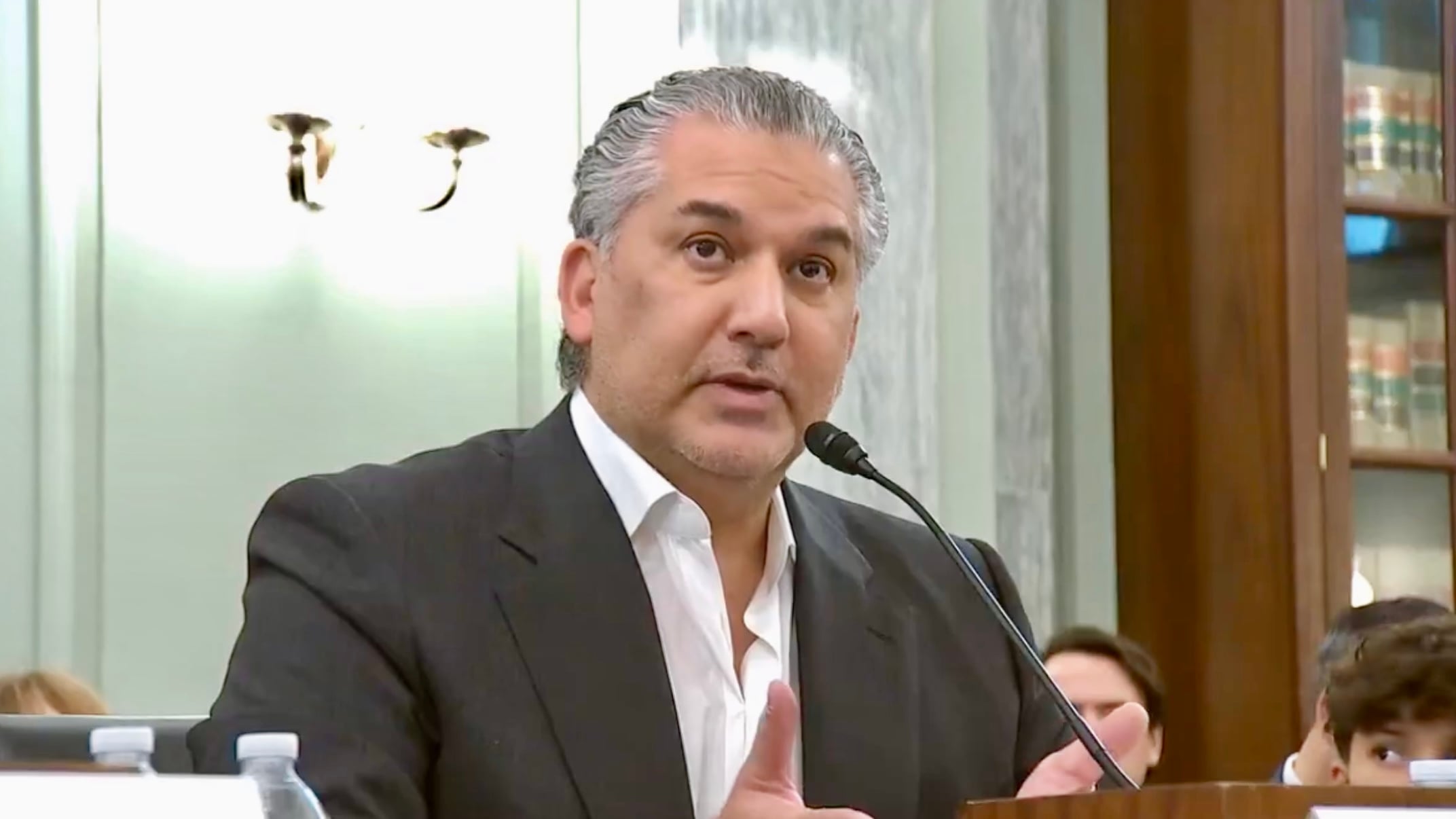
Khan, testifying on behalf of TKO Group Holdings and its Zuffa Boxing venture, argued that boxing’s current structure is failing fighters and fans alike. He pointed to the WBC recognizing 163 champions across 18 weight classes as evidence of a fragmented, bloated system with inconsistent standards and insufficient support for both professional fighters and the amateur pipeline.
Khan framed the UBO model as an opt-in alternative, not a replacement for the existing system. The bill, he stressed, does not alter or weaken the original Muhammad Ali Boxing Reform Act’s protections. It simply adds a second path for fighters and promoters who want a more centralized, league-style structure, similar to how other major professional sports operate.
The TKO president pointed to Zuffa Boxing’s partnership with Paramount+, which reaches roughly 80 million subscribers worldwide with a CBS network tie-in, as proof of what a centralized model can deliver. When asked what he would say to a young boxer about how a UBO could benefit the next generation, Khan laid out the pitch directly.
“If you want a chance to be something bigger over a shorter period of time on a platform, we were able to secure a deal with Paramount, as I said on a platform that has almost 80 million subscribers worldwide and has a network partner in CBS. If you want that exposure, if you want trading card deals, if you want merchandise deals, if you want video game deals, of which the fighters would all participate financially. If you want all of that, plus some more, come this way. If you don’t, that’s your choice,” Khan said.
Video of Khan’s testimony was shared by Jedi Goodman on X.
Khan also addressed what he sees as a broken grassroots pipeline, arguing that the professional side of the sport does not invest enough in developing the next generation of fighters.
“The amateur system is something that the professionals do not support sufficiently. That’s the pipeline. We have to make it easy fighters, just like we have a performance institute for UFC. We have a performance center for WWE. If you want to try to do one of those things, come our way and check it out. You don’t have to sign anything with us. Same thing in boxing, grassroots system,” Khan said.
The clip was again shared by Jedi Goodman on X.
De La Hoya Fires Back, Cites UFC Lawsuits and Saudi Ties
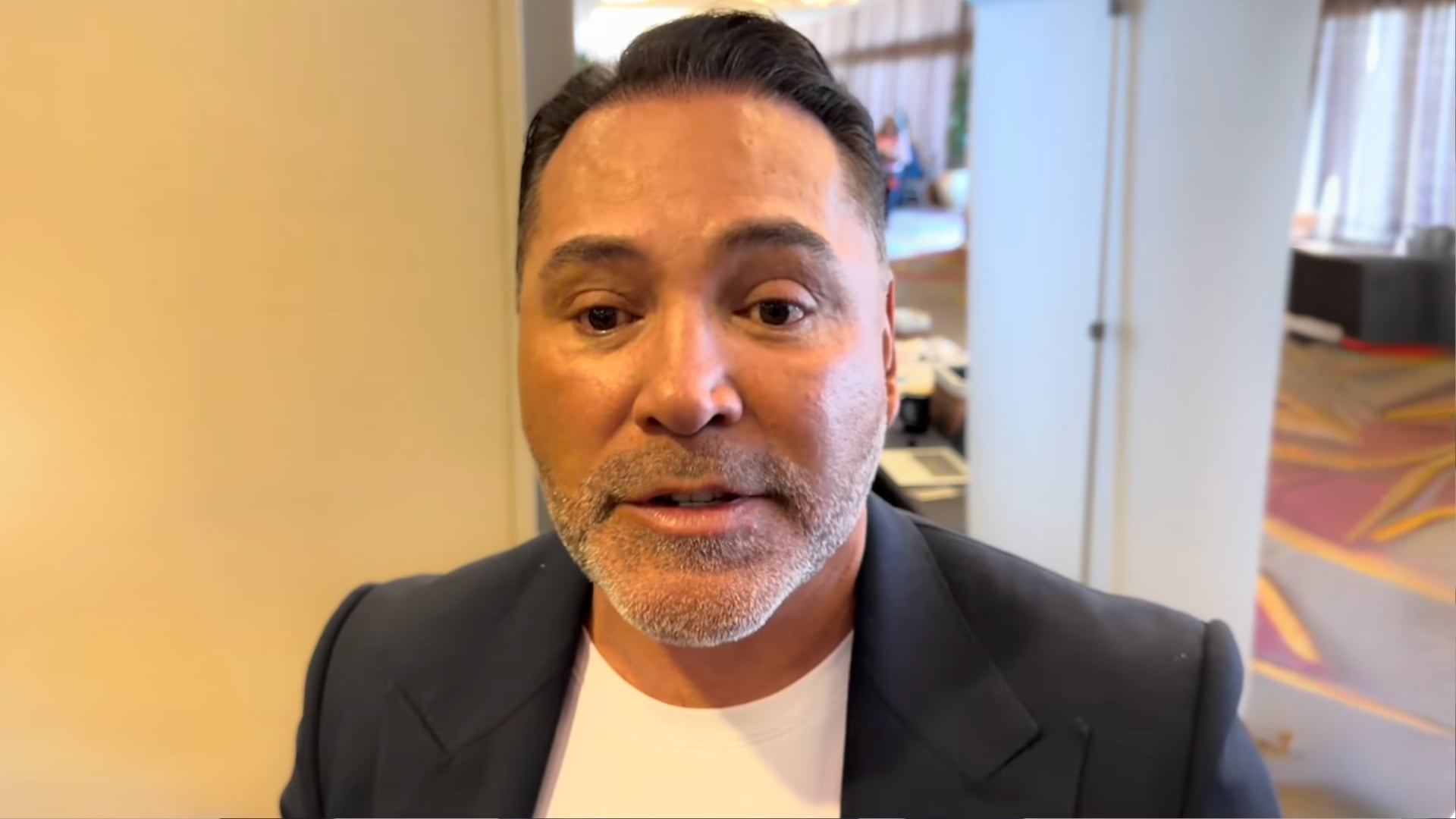
Oscar De La Hoya pushed back forcefully in his own testimony, warning senators that the UBO model risks concentrating too much power in a single promoter. The Golden Boy CEO has been vocal in his opposition for months, arguing that TKO needs the Ali Act changed specifically so it can operate in boxing the same way it does in the UFC, where a single organization controls matchmaking, rankings, contracts, and championships simultaneously.
De La Hoya went further during the hearing, pointing to existing UFC lawsuits as evidence of what happens when a single entity consolidates that level of control over a combat sport. He also raised the involvement of Saudi Arabia’s funding in the Zuffa Boxing venture as a concern, questioning whether handing a foreign-backed entity the legal framework to serve as promoter, sanctioning body, and ranking authority all at once is in the best interest of American fighters.
Video of De La Hoya’s testimony was shared by @boxingnbbq on X.
Ali Walsh Tells Senate to Strip His Grandfather’s Name From the Bill
Nico Ali Walsh, Muhammad Ali’s grandson and a professional boxer, delivered some of the hearing’s most pointed testimony. Ali Walsh told senators directly that if they pass the “Revival” Act, they should remove Muhammad Ali’s name from it, because the bill destroys the very protections his grandfather fought for.
Walsh, who co-founded the Ali Act Preservation Alliance alongside De La Hoya, WBC president Mauricio Sulaiman, and retired MMA fighter Carlos Newton, argued that the original Ali Act is an anti-monopoly law and that the Revival Act would gut that purpose entirely. He framed the bill as serving corporate interests over fighters.
“This new law is designed for billionaires, not boxers,” Walsh said.
The alliance has called on the Senate to reject the Revival Act outright, characterizing it as anti-labor legislation that serves promoter interests at the expense of fighter protections. Timothy Shipman, president of the Association of Boxing Commissions and Combative Sports, also testified at the hearing.
What the Bill Actually Changes
Beyond the UBO framework, H.R. 4624 includes provisions that apply to all of professional boxing regardless of organizational structure. Those include a $200 per round minimum payment for all professional boxers, $50,000 in medical coverage per bout, $15,000 in accidental death coverage, certified ringside physicians, and anti-doping requirements. Supporters argue these universal protections strengthen the original Ali Act rather than weaken it.
The original Muhammad Ali Boxing Reform Act, signed into law in 2000, was designed to protect fighters from exploitative practices by separating the business interests of promoters from the sanctioning bodies that control rankings and title shots. Critics of the Revival Act say the UBO model is a direct contradiction of that principle.
What Comes Next
The bill’s path forward now rests with Cruz’s committee. TKO’s broader ambitions are well documented. Zuffa Boxing, which is 40% owned by TKO with the remaining 60% held by Saudi Arabia’s Public Investment Fund through Sela, has been actively building out its roster and infrastructure while the legislative process plays out. Industry voices remain split on whether the centralized model represents boxing’s future or its undoing.
Tuesday’s hearing made clear that the Senate fight will be at least as contentious as the House debate that preceded it.
The full hearing, titled “Return to Your Corners: Have Federal Boxing Laws Gone the Distance or Slipped the Jab?”, is available via the Senate Commerce Committee. Additional coverage via Luke Thomas on Substack.