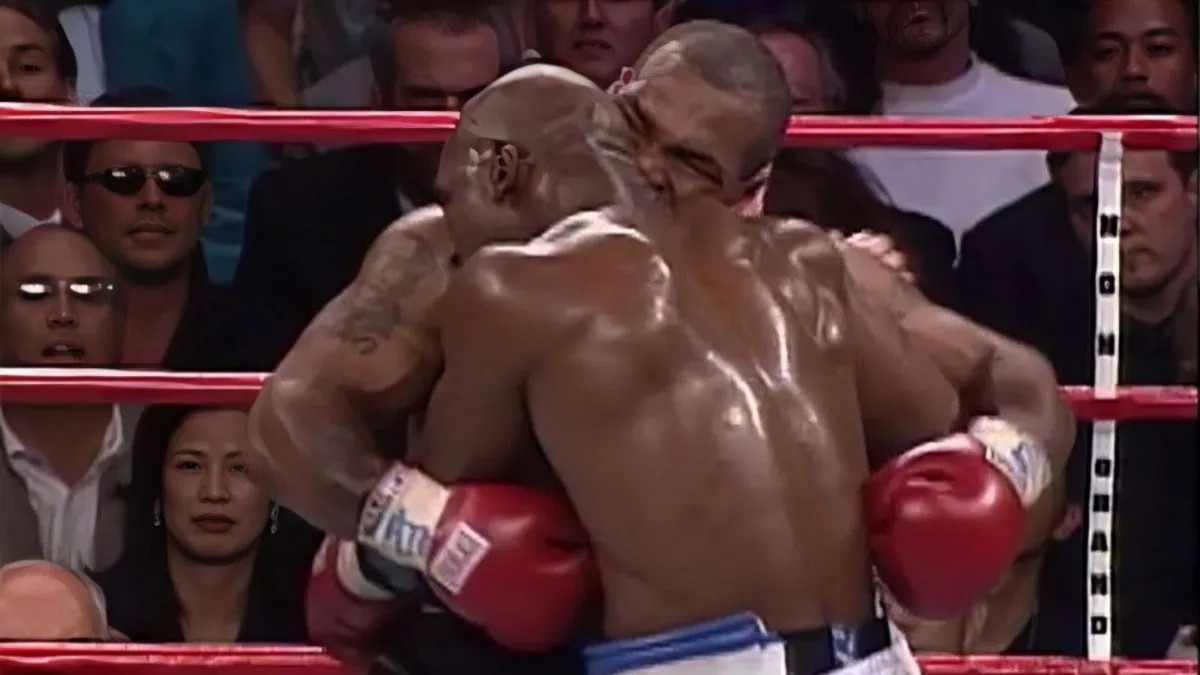
Mike Tyson has revealed exactly what went through his mind in the moment he bit Evander Holyfield’s ear during their infamous 1997 rematch, and his description is about as candid as it gets.
Speaking to ABC’s Liz Neporent while reflecting on the incident, Tyson described the sensation as immediately repulsive, explaining that he spat the piece out the moment it happened.
“I really sucked on the ear and stuff,” Tyson said. “But if you watch the fight, as soon as I did it, I spit it right out, instantaneously. It was really disgusting.”
The incident unfolded in the third round of Tyson vs. Holyfield II in Las Vegas, when a frustrated Tyson bit a chunk out of Holyfield’s right ear during a clinch. Referee Mills Lane eventually disqualified Tyson after the moment sent shockwaves through the MGM Grand arena and across the boxing world. It remains one of the most controversial single moments in the history of combat sports.
Despite the infamy of the night, Tyson and Holyfield eventually repaired their relationship and found ways to laugh about what happened. The two worked together on a barbecue sauce commercial that played directly on their rivalry, leaning into the incident with humor neither man could have managed in the immediate aftermath.
Years later, Tyson took the joke even further when he launched his Mike Bites cannabis gummies, ear-shaped edibles that Holyfield publicly endorsed.
Mike Tyson has never been shy about speaking his mind on the sport of boxing, and in a recent interview with Ring Magazine’s Manouk Akopyan, Iron Mike delivered sharp verdicts on the current generation, the era debate, and who he believes is getting robbed by the sport’s power brokers.
Benavidez Being Done Dirty
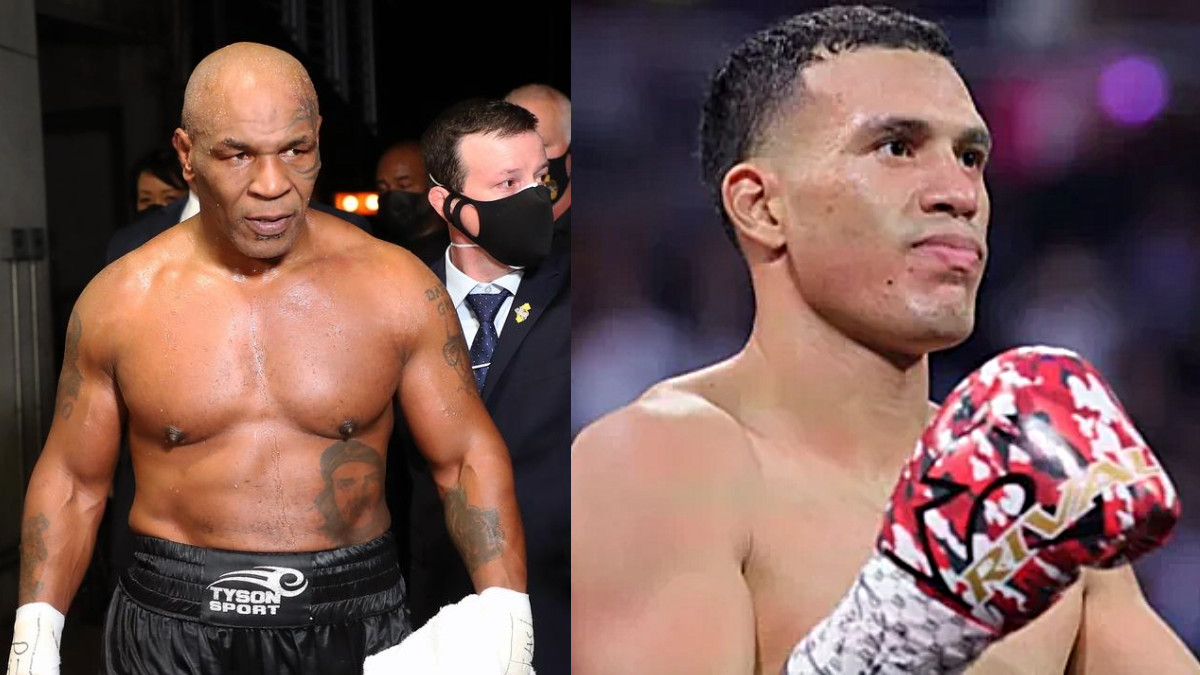
The most passionate moment of the conversation came when Tyson was asked about David Benavidez, who has long been viewed as one of the most avoided fighters in boxing. Tyson didn’t hold back.
“He’s being done dirty. Benavidez should have got some of those big fights. He hasn’t gotten no big fight. And that’s going to be something that he’s going to have over boxing — they didn’t give him the good fights. If he doesn’t get the money that he’s supposed to have after he finishes boxing, it’s because boxing screwed him. Not because he was too good — because he was too good and boxing didn’t want to give him a break. Those guys would strip guys of their titles. They didn’t want to fight him.”
Benavidez has since moved up to cruiserweight, a division Tyson described bluntly:
“Can I be sincere with you? In that division, nobody knows who the hell the champion is. Nobody.”
The lack of name recognition at cruiserweight, Tyson suggested, only compounds the challenge Benavidez faces in finally getting the profile fight his talent deserves.
Would Usyk Have Survived Tyson’s Era?
Tyson also weighed in on how current heavyweight champion Oleksandr Usyk would have fared against the warriors of his generation — and he wasn’t entirely sold.
“Holyfield would have gave him a great fight. That’s a different era. You got to kill those guys to beat them. You’re not just going to beat them by being… You got to kill them to beat them. It’s hard to beat these guys without getting a scratch on your face.”
Tyson pointed to the sheer volume of title defenses as a key differentiator between eras.
“We’re different fighters. The fighters of this era should see that and know that we’re different fighters. We were fighting four times a year, defending the title. These guys are defending their title two times, one time every two years.”
Crawford Among the Four Kings?
Asked whether Terence Crawford could have competed alongside Sugar Ray Leonard, Roberto Duran, Thomas Hearns, and Marvin Hagler in their prime, Tyson offered measured praise.
“There were people back then that weren’t as good a fighter as he was that were champion. He would have done well.”
Tyson also named the fighters he most enjoys watching today: Shakur Stevenson, Keyshawn Davis, Crawford, Naoya Inoue, and Jermall Charlo all earned his stamp of approval.
And despite a career built on ferocious rivalries, Tyson was quick to contextualize any harsh words he may have said about past opponents over the years.
“Whatever I said about them — derogatory — was because I was fighting them. I have the highest amount of respect for those guys I fought.”
Mike Tyson’s comments reflect both admiration for boxing’s past and concern for its present. Ultimately, his remarks underscore a broader point: boxing still has exceptional talent, but the sport must do a better job of delivering the big fights and opportunities that truly allow those fighters to define their legacies.
Boxing legend Mike Tyson is on a mission to fix what he sees as a fundamental crisis in American boxing, and it starts at the grassroots level.
In a wide-ranging conversation with Manouk Akopyan of Ring Magazine, Tyson sounded the alarm on the collapse of amateur boxing infrastructure across the United States, pointing to a shortage of local boxing clubs as the root cause of the country’s declining global competitiveness.
“We’re lacking boxing clubs. At one time in the 80s, they had boxing clubs all over the country, three and four in different cities. The fact is that they’re all dying. They’re talking about taking boxing out of the Olympics. We need more boxing clubs to develop better fighters. The more fighters, the more fights they have, the more experience they become, and the more successful they become professionally.”
The Lomachenko Blueprint
To illustrate his point, Tyson pointed to Vasyl Lomachenko as living proof that amateur volume is everything. The Ukrainian pound-for-pound great turned professional with just four bouts and immediately dismantled elite competition. This is something Tyson attributes directly to the staggering number of amateur fights Lomachenko compiled before going pro.
“He comes to America. He has four pro fights. He wins the world title. Why? Because he got a thousand amateur fights — only 500 that he has on record. That’s why he comes here with four fights and beats everybody like he owns them.”
Tyson then turned the attention on himself. Despite becoming the youngest heavyweight champion in history, he acknowledged that his own limited amateur experience was a real competitive disadvantage against opponents with far more seasoning.
“After three years boxing I’m fighting with these guys — I didn’t have the experience to beat these guys even though I beat them. I’m fighting these guys with 20 fights; these guys got 80, 100 fights.”
The Mike Tyson Invitational
Tyson’s response to this crisis is the Mike Tyson Invitational Amateur Showcase, a three-day event running March 12th–14th in Las Vegas, designed to develop and spotlight the next generation of American talent. Tyson framed the invitational as a personal mission, not just a promotional vehicle.
For Tyson, the connection between amateur development and professional success isn’t theoretical — it’s the story of his own career. He described amateur competition as the most formative period of his life in the sport.
“This is my life. Amateur fighting — fighting is my life. The best time of my fighting career was when I was an amateur, not when I was champion of the world, because there were so many ups and downs, so many desires.”
With boxing’s status at the Olympic Games currently under threat and American heavyweights absent from the gold medal podium since 2004, Tyson’s push for grassroots revival comes at a critical moment for the sport’s long-term health in the United States.
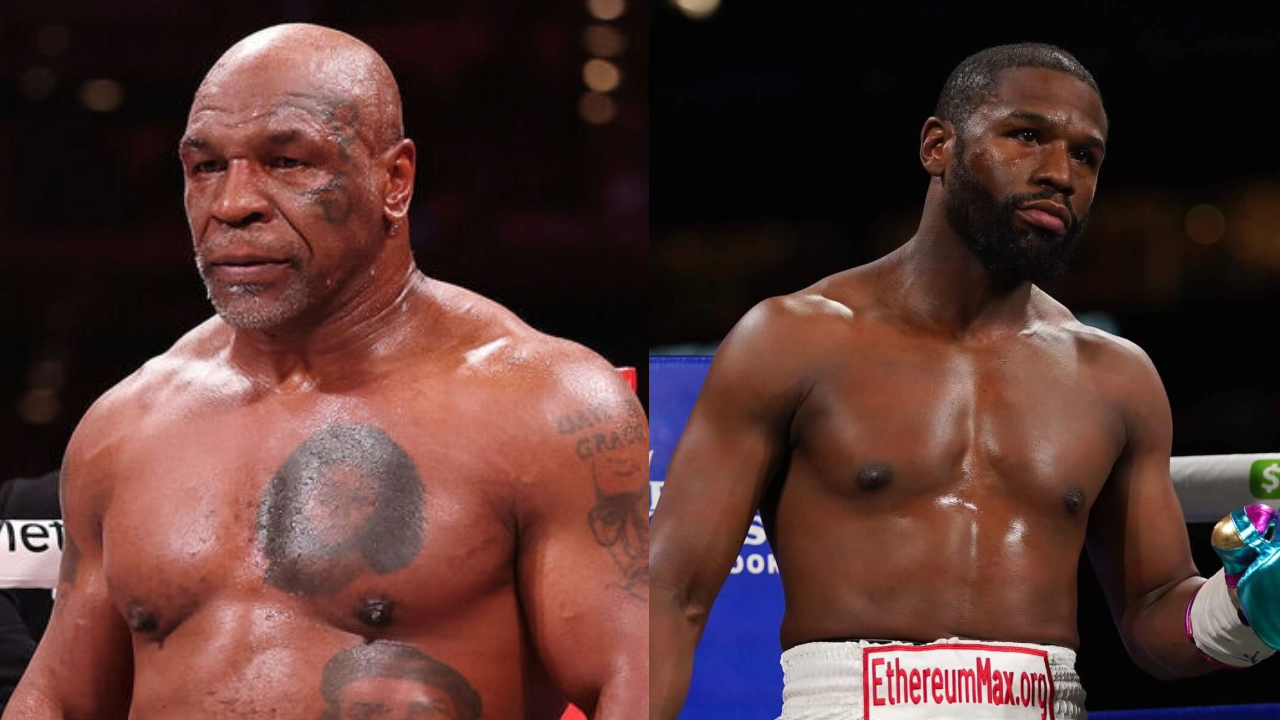
Mike Tyson recently put any remaining doubt to rest as he stated that his exhibition showdown with Floyd Mayweather is happening. Iron Mike also stateed that he’s grateful for every moment of it.
Speaking with Manouk Akopyan of Ring Magazine, Tyson was direct when confirming the fight’s status.
“It’s gonna happen. It’s going to happen. Thank God. I’m so grateful for it.”
Tyson was equally blunt about what fans should expect when the two legends step into the ring. He pushed back on any framing that the event is driven by personal animosity, but made clear he intends to compete seriously.
“I have no animosity. We is boxing. We’re two fighters. We’re boxing. So this is going to be a show. I’m not knocking out anybody. Nobody’s knocking me out. We’re gonna fight. We fight. It’s gonna be a nice show for the people to watch.”
When asked whether there’s anything he wouldn’t do at this stage of his career, Tyson delivered a line that summed up his competitive philosophy perfectly:
“Anything’s possible. Hey, the price is right. I fight a lion.”
For Tyson, the exhibition represents yet another chapter in a late-career arc that has kept him in the public eye well into his late 50s. His last appearance in a boxing ring was a closely watched bout against Jake Paul in late 2024.
With a confirmed date and two all-time legends involved, the April fight figures to generate significant global interest — and Tyson made clear he’s approaching it with the same open-market mentality he’s always had: willing to take on anyone, at any price, in any era.
Mike Tyson has always been more than just a fighter — he’s a cultural figure with strong opinions on food, power, loyalty, and the business of boxing. In a revealing interview with Ring Magazine’s Manouk Akopyan, Tyson spoke candidly on topics ranging from ultra-processed food to President Trump, Dana White, and his personal philosophy on fighter pay.
On Dana White: “I’m Pro Boxing”
Tyson pushed back on perceptions that he’s a Dana White loyalist, framing his support for the UFC president’s move into boxing with Zuffa Boxing as purely sport-driven advocacy.
“Everybody thinks that I’m pro Dana. I’m just pro boxing.”
Tyson said he believes White should be in boxing, but made clear the endorsement isn’t personal — it’s about bringing more competitive infrastructure and money into the sport.
Open Markets Over Regulation
On the subject of the Muhammad Ali Boxing Reform Act and fighter protections, Tyson took a free-market stance, describing the legislation as being in its early stages during his career and advocating instead for open competition to drive up fighter pay.
“I want to have open markets. Whoever’s going to pay me the highest bid.”
For Tyson, the answer to boxing’s systemic problems isn’t more regulation — it’s more competition, more clubs, more fights, and more legitimate money flowing to the fighters who earn it.
One Word on Trump: “Loyalty”
Asked what makes President Donald Trump a unique figure in his life, Tyson kept it short: “Loyalty. Loyalty.”
The two go back decades. Tyson recalled the heyday of Trump’s Atlantic City casino era as a golden period for boxing — and for both men personally. “The whole world focused in on us every time we fought in Atlantic City at Trump’s casino.”
He offered a stark contrast when asked about Atlantic City today: “I went there to do a show. I was nervous. I thought I was going to get shot.”
On what boxing might look like if Trump had stayed more directly involved in the sport, Tyson was straightforward: “Boxing would be a lot better, and most boxers would perhaps have more money as well.”
The Fight Against Ultra-Processed Food
Tyson, who appeared in a Super Bowl advertisement promoting healthier eating choices and once weighed 350 pounds himself, didn’t exempt himself from criticism on this front.
“I’m guilty of it too. We have to stop ultra-processed foods. It tastes so good because it’s so addicting — it’s a narcotic. Everything the FDA [approves] is narcotics.
It’s normal for us to eat it, especially if you’re in a low-income neighborhood. Processed, ultra-processed food is a necessity to us. We’re so happy to have that because it tastes good — and that’s how they get us.”
The remarks aligned Tyson with a broader national conversation about food policy and the health impacts of the modern American diet, particularly in underserved communities.