Tag: Oscar De La Hoya

  • Ali Act Reform Hits Senate as Nick Khan, De La Hoya Face Off

    Ali Act Reform Hits Senate as Nick Khan, De La Hoya Face Off

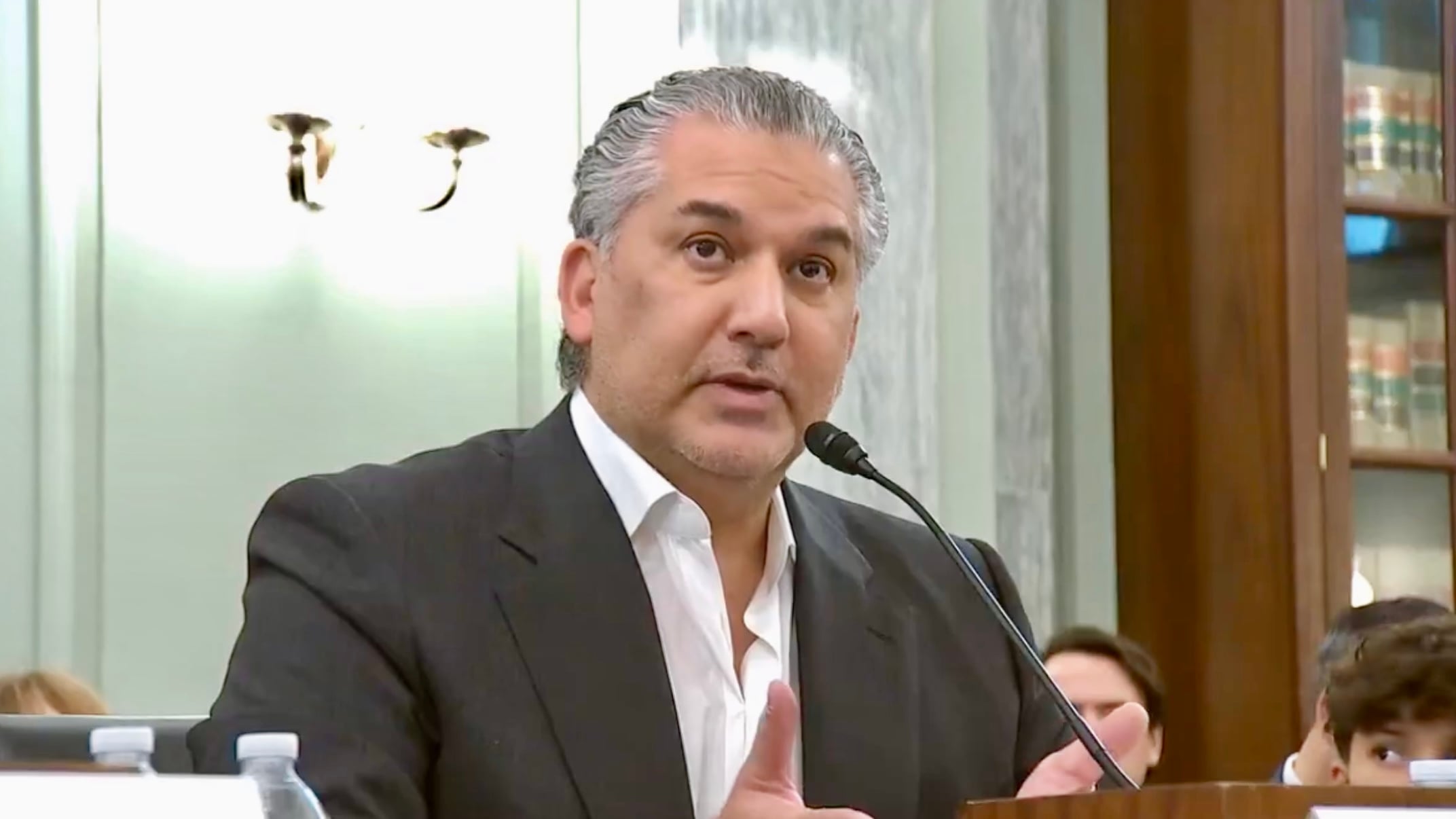
    The U.S. Senate heard sharply divided testimony on Tuesday as lawmakers weighed whether to overhaul federal boxing law for the first time in over two decades. The hearing before the Senate Committee on Commerce, Science, and Transportation, chaired by Senator Ted Cruz, put TKO president Nick Khan and Golden Boy Promotions CEO Oscar De La Hoya on opposite sides of a debate that could reshape the sport’s power structure.

    At issue is the Muhammad Ali American Boxing Revival Act (H.R. 4624), which passed the House by voice vote in March and now faces its first Senate scrutiny. The bill would create a new legal category called a Unified Boxing Organization, allowing a single entity to handle promotion, rankings, titles, and sanctioning under one roof. It is the first piece of boxing legislation to clear the House in 26 years.

    Khan Makes TKO’s Case for Centralized Boxing

    Khan, testifying on behalf of TKO Group Holdings and its Zuffa Boxing venture, argued that boxing’s current structure is failing fighters and fans alike. He pointed to the WBC recognizing 163 champions across 18 weight classes as evidence of a fragmented, bloated system with inconsistent standards and insufficient support for both professional fighters and the amateur pipeline.

    Khan framed the UBO model as an opt-in alternative, not a replacement for the existing system. The bill, he stressed, does not alter or weaken the original Muhammad Ali Boxing Reform Act’s protections. It simply adds a second path for fighters and promoters who want a more centralized, league-style structure, similar to how other major professional sports operate.

    The TKO president pointed to Zuffa Boxing’s partnership with Paramount+, which reaches roughly 80 million subscribers worldwide with a CBS network tie-in, as proof of what a centralized model can deliver. When asked what he would say to a young boxer about how a UBO could benefit the next generation, Khan laid out the pitch directly.

    “If you want a chance to be something bigger over a shorter period of time on a platform, we were able to secure a deal with Paramount, as I said on a platform that has almost 80 million subscribers worldwide and has a network partner in CBS. If you want that exposure, if you want trading card deals, if you want merchandise deals, if you want video game deals, of which the fighters would all participate financially. If you want all of that, plus some more, come this way. If you don’t, that’s your choice,” Khan said.

    Video of Khan’s testimony was shared by Jedi Goodman on X.

    Khan also addressed what he sees as a broken grassroots pipeline, arguing that the professional side of the sport does not invest enough in developing the next generation of fighters.

    “The amateur system is something that the professionals do not support sufficiently. That’s the pipeline. We have to make it easy fighters, just like we have a performance institute for UFC. We have a performance center for WWE. If you want to try to do one of those things, come our way and check it out. You don’t have to sign anything with us. Same thing in boxing, grassroots system,” Khan said.

    The clip was again shared by Jedi Goodman on X.

    De La Hoya Fires Back, Cites UFC Lawsuits and Saudi Ties

    Oscar De La Hoya pushed back forcefully in his own testimony, warning senators that the UBO model risks concentrating too much power in a single promoter. The Golden Boy CEO has been vocal in his opposition for months, arguing that TKO needs the Ali Act changed specifically so it can operate in boxing the same way it does in the UFC, where a single organization controls matchmaking, rankings, contracts, and championships simultaneously.

    De La Hoya went further during the hearing, pointing to existing UFC lawsuits as evidence of what happens when a single entity consolidates that level of control over a combat sport. He also raised the involvement of Saudi Arabia’s funding in the Zuffa Boxing venture as a concern, questioning whether handing a foreign-backed entity the legal framework to serve as promoter, sanctioning body, and ranking authority all at once is in the best interest of American fighters.

    Video of De La Hoya’s testimony was shared by @boxingnbbq on X.

    Ali Walsh Tells Senate to Strip His Grandfather’s Name From the Bill

    Nico Ali Walsh, Muhammad Ali’s grandson and a professional boxer, delivered some of the hearing’s most pointed testimony. Ali Walsh told senators directly that if they pass the “Revival” Act, they should remove Muhammad Ali’s name from it, because the bill destroys the very protections his grandfather fought for.

    Walsh, who co-founded the Ali Act Preservation Alliance alongside De La Hoya, WBC president Mauricio Sulaiman, and retired MMA fighter Carlos Newton, argued that the original Ali Act is an anti-monopoly law and that the Revival Act would gut that purpose entirely. He framed the bill as serving corporate interests over fighters.

    “This new law is designed for billionaires, not boxers,” Walsh said.

    The alliance has called on the Senate to reject the Revival Act outright, characterizing it as anti-labor legislation that serves promoter interests at the expense of fighter protections. Timothy Shipman, president of the Association of Boxing Commissions and Combative Sports, also testified at the hearing.

    What the Bill Actually Changes

    Beyond the UBO framework, H.R. 4624 includes provisions that apply to all of professional boxing regardless of organizational structure. Those include a $200 per round minimum payment for all professional boxers, $50,000 in medical coverage per bout, $15,000 in accidental death coverage, certified ringside physicians, and anti-doping requirements. Supporters argue these universal protections strengthen the original Ali Act rather than weaken it.

    The original Muhammad Ali Boxing Reform Act, signed into law in 2000, was designed to protect fighters from exploitative practices by separating the business interests of promoters from the sanctioning bodies that control rankings and title shots. Critics of the Revival Act say the UBO model is a direct contradiction of that principle.

    What Comes Next

    The bill’s path forward now rests with Cruz’s committee. TKO’s broader ambitions are well documented. Zuffa Boxing, which is 40% owned by TKO with the remaining 60% held by Saudi Arabia’s Public Investment Fund through Sela, has been actively building out its roster and infrastructure while the legislative process plays out. Industry voices remain split on whether the centralized model represents boxing’s future or its undoing.

    Tuesday’s hearing made clear that the Senate fight will be at least as contentious as the House debate that preceded it.

    The full hearing, titled “Return to Your Corners: Have Federal Boxing Laws Gone the Distance or Slipped the Jab?”, is available via the Senate Commerce Committee. Additional coverage via Luke Thomas on Substack.
  • Oscar De La Hoya Wants Ryan Garcia To Face World Champion Next

    Oscar De La Hoya Wants Ryan Garcia To Face World Champion Next

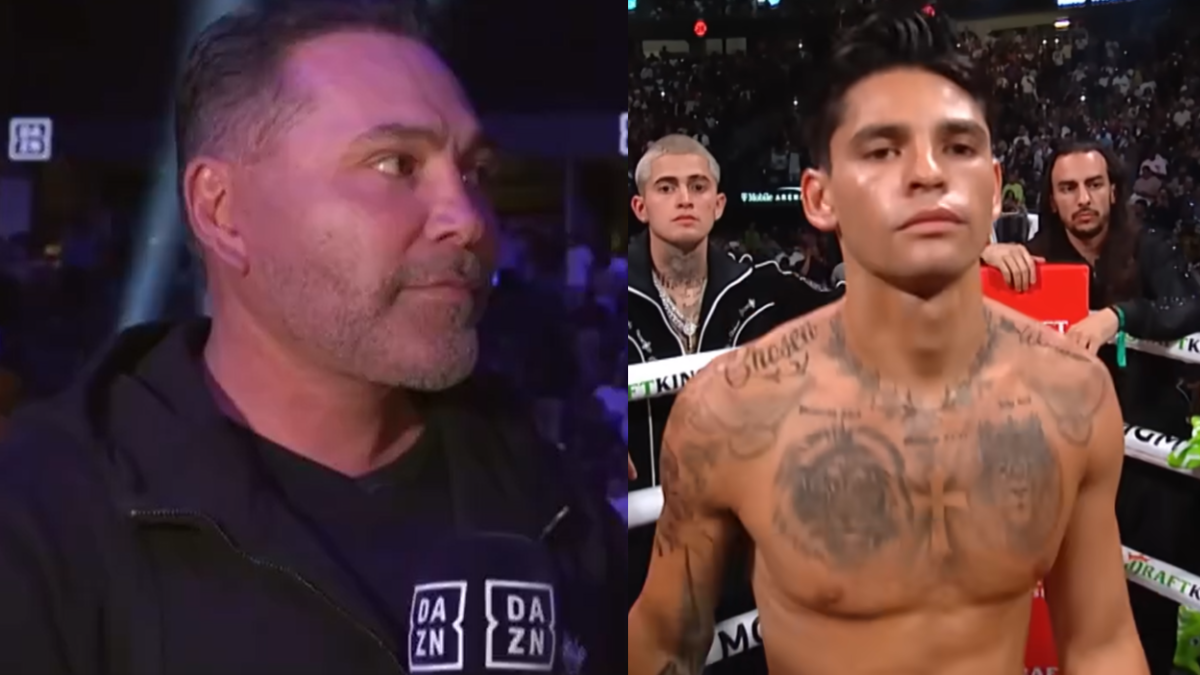
    Ryan Garcia is being targeted for a fight against a world champion by Oscar De La Hoya after Garcia’s recent victory over Mario Barrios. Garcia defeated Barrios by unanimous decision on February 20th, 2026, in Las Vegas to win the WBC welterweight title.

    De La Hoya’s ambitious plans aim to solidify Garcia’s position in boxing. Garcia is the current WBC welterweight champion and is ranked #6 in the WBA welterweight rankings as of December 2025. No mandatory challenger is currently in place for Garcia’s WBC title, giving him flexibility for his first title defense.

    De La Hoya’s Vision

    De La Hoya’s statement emphasizes his determination to secure a high-profile fight for Garcia. Speaking to DAZN, he said:

    “I actually like the rematch with Devin Haney. There’s a lot of talk, a lot of chatter right now. I think Devin Haney actually does deserve the rematch, just because he’s been talking a lot and his last performance was a really good performance.

    “What Ryan did in his last fight with Barrios, obviously a world champion, [it means] he’s back, better than ever mentally, physically. I’d love to see that rematch, Haney vs Ryan Garcia.”

    De La Hoya then urged Haney not to take a bout with WBA champion Rolly Romero and instead face Garcia.

    “Ryan Garcia-Devin Haney makes all the sense in the world, do not take a tune up, let’s make this fight happen.”

    Potential opponents discussed include Shakur Stevenson, Devin Haney, and Conor Benn. Josh Kelly has also called out Garcia for a super welterweight title fight.

    Garcia previously lost a unanimous decision to Rolando Romero for the WBA welterweight title last year. Immediately after defeating Barrios, Garcia had also called out Shakur Stevenson.

  • De La Hoya Warns Ortiz Jr. Dispute Echoes Mikey Garcia, Andre Ward

    De La Hoya Warns Ortiz Jr. Dispute Echoes Mikey Garcia, Andre Ward

    Oscar De La Hoya is defending his contractual rights against Vergil Ortiz Jr. — and he’s placing the blame for the standoff squarely on Ortiz’s management team.

    De La Hoya, speaking on FightHype on March 12, 2026 — the same day he celebrated a legal victory in a separate case — said Ortiz has the talent and the time to rebuild his career under Golden Boy Promotions, but that bad advice is keeping him out of the ring.

    “Virgil Ortiz is 29, 30 years old. He has his own voice. He can choose whatever he wants to choose. So he doesn’t have to listen to his manager who’s giving him the wrong advice and his lawyer who’s just keeping him away from boxing. It’s crazy.”

    De La Hoya Standing Firm on His Contract

    With a judge already ruling in his favor on the contract’s validity, De La Hoya said he has no intention of walking away from his legal position — and framed it as a matter of principle, not just business.

    “I’m going to defend my rights because I have a contract that’s in place that the judge ruled on. Those are my rights as a fighter. You know what you’re signing.”

    He pushed back on any suggestion that Golden Boy’s terms are being forced on Ortiz, insisting his approach with fighters has always been one of full transparency.

    “Me as a fighter, I explain to the fighters everything that’s on the table. There’s nothing to hide.”

    ‘Are We Seeing Another Mikey Garcia Situation?’

    De La Hoya drew a historical parallel to fighters who stepped away from the sport in their prime due to promotional disputes, suggesting Ortiz is at risk of making the same mistake.

    “Are we seeing another Mikey Garcia situation? It’s pretty sad. Andre Ward, too.”

    Both Garcia and Ward were elite-level talents whose careers were complicated — and in Ward’s case effectively ended — by contractual and promotional disagreements.

    De La Hoya said Ortiz’s management appears to be steering him in a similar direction, keeping a prime fighter on the sidelines while the clock runs on his best years.

    “The fact that there’s a manager and a lawyer who’s giving you the wrong advice — maybe the fighter should stand up and say, ‘Oscar’s right. Let me continue my career and let me fight and let me continue making a lot of money.’”

    The Bigger Picture

    De La Hoya’s comments came as part of a broader conversation about fighter compensation and promoter-athlete dynamics across combat sports.

    He has positioned Golden Boy as a fighter-first operation, one that gives athletes a larger share of revenue compared to what he describes as an inverted financial structure in organizations like the UFC.

    Whether Ortiz ultimately returns to Golden Boy or the dispute escalates further remains to be seen, but De La Hoya made clear he isn’t blinking — and that the door remains open if Ortiz’s camp changes course.

  • Oscar De La Hoya: UFC Suppresses Fighters to Protect Its Brand

    Oscar De La Hoya: UFC Suppresses Fighters to Protect Its Brand

    Oscar De La Hoya says the UFC’s business model is built on keeping fighters small — and that Jon Jones requesting his release is proof the cracks are finally showing.

    Speaking on FightHype on March 12, 2026, De La Hoya weighed in on Jones seeking his UFC release after being lowballed for the White House card, offering a blunt take on the organization’s philosophy toward its own athletes.

    “Every fighter in the UFC is finally starting to realize,” De La Hoya said. “I’m glad he’s speaking up. I’m glad he’s in the right. Wish him all the best — he’s a great fighter. He’s their greatest fighter.”

    UFC Doesn’t Want Any Fighter Bigger Than the Brand

    De La Hoya argued the suppression isn’t accidental — it’s structural. The UFC, he said, has always prioritized the organization’s identity over any individual star, and that strategy is now backfiring.

    “They want to suppress other fighters. They don’t want any fighter to be bigger than the UFC. And that’s why the UFC is going tanking down.”

    He tied the UFC’s recent push into boxing directly to that instability, framing it as a financial lifeline rather than a strategic expansion.

    “That’s why they’re involved in boxing now — because they want to start a new entity to help their bottom line. That’s it.”

    Boxing Pays Fighters. The UFC Pays Executives.

    De La Hoya drew a sharp contrast between how the two sports distribute revenue. In boxing, he said, fighters capture the largest share of earnings. In the UFC, the pyramid is flipped.

    “Fighters are starting to understand that when you have such a global company and presence making tons and tons of money — not for the fighters, but for the bottom line and for the executives — there’s something wrong there,” he said.

    “In boxing, it’s structured the other way around. The fighters make all the money. In the UFC, it’s the other way around. And that’s wrong.”

    He pointed to the ongoing uproar over UFC fighter pay as evidence of a systemic failure. When Conor Benn’s reported $15 million payday became a flashpoint across the roster, De La Hoya saw it as revealing — not about McGregor, but about everyone else.

    “Good for him, he’s getting his paycheck. It’s a one-off. But what about the UFC fighters who’ve been fighting all their lives, putting their lives on the line and getting a fraction of what the event totals for the night? It’s just not fair.

    The fact that every single UFC fighter is complaining about $15 million goes to show you that no UFC fighter has made $15 million — and they deserve way much more than what the UFC overall is taking in.”

    Ronda Rousey, the Antitrust Suit, and the Legal Tide Turning

    De La Hoya also validated Ronda Rousey’s recent comments framing Dana White as merely an “employee” with limited structural power. “She’s totally right,” he said. “She made the clap back in a positive way.”

    On the ongoing antitrust lawsuit brought by UFC fighters, De La Hoya expressed confidence that the legal momentum is on the athletes’ side. “It’s a great thing for the fighters’ league that is suing the UFC. They won one time, they’re probably going to win again.”

    For De La Hoya, the broader point is that the reckoning has been a long time coming — and the UFC’s expansion into boxing is a sign of an organization scrambling, not thriving.